The operation
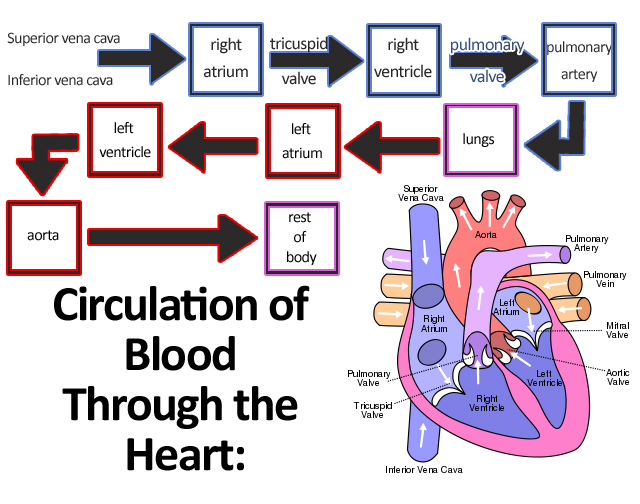
Here's a picture of Teddy's heart. If you need a picture of a heart how it's meant to be, that's on the right.
The first thing that you might notice, if you're familiar with how a heart should look, is the thing with the "1" on it; there's a single artery leading from the heart. That's the truncus. It also has 4 leaves on the valve instead of 3 like it should. If you look where it connects to his heart, you see there's a big chunk of the wall between the two lower chambers, or ventricles, of his heart. That's the second big problem with that single, big, truncus. So they'll seal that with a Gore-tex patch. They'll differentiate the truncus, and pass the aorta in to the left (his left, not yours) chamber. The pulmonary artery will have a conduit run from the heart to the arteries. That conduit may be one of several different types. It may have a valve in it, or the valve may go in at his heart. That's a game day call for the surgeon.
The #2 label above shows his aorta goes to the right (his right) rather than the left (his left again). That's not a problem, but it is a quirk of anatomy that he'll probably have his whole life. The #3 label is a hole that almost all babies have when born. It's not a facet of his particular anatomy, and it generally closes. The day of the operation, the surgeon may decide that since he's there anyway, he may as well close it, just to be sure. Or he might not.
As for risks, there's all the standard surgical risks (infection, organ damage, and death) that come with any surgery. There's a chance of bleeding. He'll be on a heart-lung bypass while they do it. He may come back with an irregular heart beat. That's likely to correct itself, although there is a chance that they will have to use the temporary pace maker probes that they'll leave in him to correct it for a while. If that doesn't solve it, then there will be a second operation to put in a permanent pace-maker. That's the most likely outcome of the bad outcomes here, and it's in the neighborhood of a 3% chance. They're not expecting it, but that's the consent info that we had to sign. Overall, they expect the operation to go smoothly, and that he'll be back into the general ward, or step-down unit, within a few days. The likely thing that may cause him to take a while to go home is that it may take a while to get him feeding properly again. However, he's doing pretty well now, eating almost 50 ml at a pass, which for someone born 3 weeks early (now 2 weeks earlier than his due date) is pretty good.
The first thing that you might notice, if you're familiar with how a heart should look, is the thing with the "1" on it; there's a single artery leading from the heart. That's the truncus. It also has 4 leaves on the valve instead of 3 like it should. If you look where it connects to his heart, you see there's a big chunk of the wall between the two lower chambers, or ventricles, of his heart. That's the second big problem with that single, big, truncus. So they'll seal that with a Gore-tex patch. They'll differentiate the truncus, and pass the aorta in to the left (his left, not yours) chamber. The pulmonary artery will have a conduit run from the heart to the arteries. That conduit may be one of several different types. It may have a valve in it, or the valve may go in at his heart. That's a game day call for the surgeon.
The #2 label above shows his aorta goes to the right (his right) rather than the left (his left again). That's not a problem, but it is a quirk of anatomy that he'll probably have his whole life. The #3 label is a hole that almost all babies have when born. It's not a facet of his particular anatomy, and it generally closes. The day of the operation, the surgeon may decide that since he's there anyway, he may as well close it, just to be sure. Or he might not.
As for risks, there's all the standard surgical risks (infection, organ damage, and death) that come with any surgery. There's a chance of bleeding. He'll be on a heart-lung bypass while they do it. He may come back with an irregular heart beat. That's likely to correct itself, although there is a chance that they will have to use the temporary pace maker probes that they'll leave in him to correct it for a while. If that doesn't solve it, then there will be a second operation to put in a permanent pace-maker. That's the most likely outcome of the bad outcomes here, and it's in the neighborhood of a 3% chance. They're not expecting it, but that's the consent info that we had to sign. Overall, they expect the operation to go smoothly, and that he'll be back into the general ward, or step-down unit, within a few days. The likely thing that may cause him to take a while to go home is that it may take a while to get him feeding properly again. However, he's doing pretty well now, eating almost 50 ml at a pass, which for someone born 3 weeks early (now 2 weeks earlier than his due date) is pretty good.

Comments
Post a Comment